OGGI, sabato 26 ottobre 2013 alle ore 18:30
a Bologna, presso la Libreria delle Moline
(via delle Moline 3)
presentazione del primo libro
della collana SYN _ scritture di ricerca
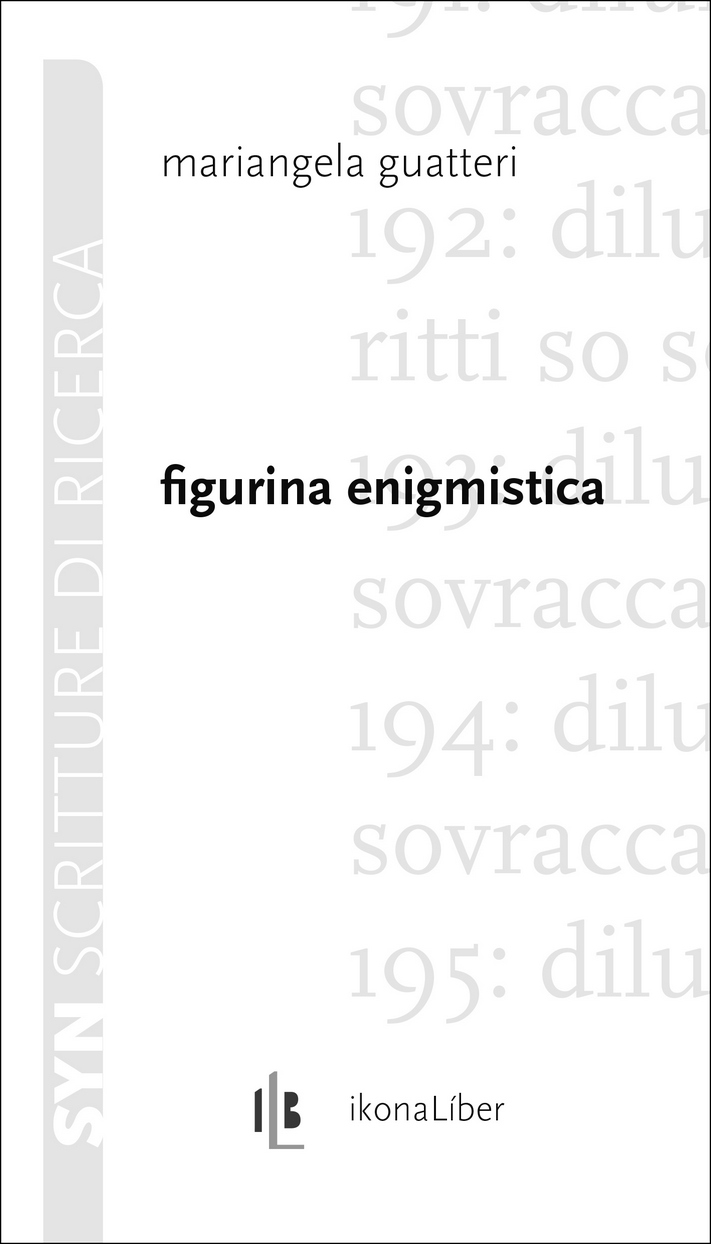
Figurina enigmistica
di
Mariangela Guatteri
edizioni IkonaLíber
[ http://www.ikonaliber.com/ ]
In dialogo:
Vincenzo Bagnoli, Marco Giovenale, Michele Zaffarano
Letture dell’autrice.
§
Su facebook:
https://www.facebook.com/events/231021427062146/
§
Mariangela Guatteri (Reggio Emilia, 1963) vive a Montericco. È redattore di GAMMM, co-curatore delle pubblicazioni bilingui Benway Series, e contribuisce a diversi blog dedicati alla scrittura di ricerca e all’asemic writing. Per una parte della sua vita si è occupata di arte visiva, didattica, tecnologie digitali e architettura dell’informazione. Ha pubblicato libri di poesia e in prosa, e alcuni suoi testi sono tradotti in francese e in serbo.
Recentemente, in prosa: Casino Conolly, nel volume collettivo Ex.it 2013 (Tielleci, 2013), Il secondo nome (Arcipelago, 2012), Tavola delle materie (diyfferx, 2012), Nuovo soggettario (diyfferx, 2011). Il suo ultimo libro di poesia è Stati di assedio (Anterem, 2011 – Premio Lorenzo Montano).
Diversi materiali – testi, opere video/visive, asemics – sono pubblicati in rivista e in rete. Alcune pagine di Figurina enigmistica sono state anticipate nel n. 16 de “L’Ulisse” (LietoColle, marzo 2013). Tracce e notizie del suo lavoro sono raccolte nel sito http://mariangelaguatteri.wordpress.com.
*
Figurina enigmistica
http://www.ikona.net/index.php?option=com_content&view=article&id=17&Itemid=9
Syn
http://www.ikona.net/index.php?option=com_content&view=article&id=18&Itemid=9
LIBRERIA DELLE MOLINE
Via delle Moline 3 – 40126 Bologna, Italy
tel. 051 262977
_