.
.

Qualche tempo fa ho completato una traduzione molto impegnativa. Non ho lavorato per un compenso ma per inseguire il sogno di far riecheggiare in italiano un’opera ‘difficile’, che però offre la possibilità di riattivare una connessione vitale con la storia. Propone un processo di rimemorazione e consapevolezza che riguarda anche il presente. Attiva un ritmo che intreccia il detto al non poter dire, per farne elaborazione del lutto e atto liberatorio. Il libro che ne è risultato, un libro, a mio parere, molto bello e complesso, è ora oggetto di un attacco da parte della stessa autrice, che ne ha chiesto la distruzione per motivi che, visti da qui, sembrano abnormi (profanazione, appropriazione, ecc). Per quale salto quantico siamo arrivate a questo? A quale spazio di ascolto reciproco possiamo appellarci? Mi chiedo se esista un lessico del confronto che non sia la riproduzione di uno script rovesciato, riproposto, ripetuto (che a me pare, in questo caso un po’ vuoto: tu sei razzista, no sei razzista tu, ecc). A quale pensiero meticcio, a quale poetica del contatto possiamo chiedere di darci strumenti per capire (e parlare)? Queste e altre domande mi affollano la testa, senza darmi pace. Intanto sulla pagina dell’editore italiano, Benway, è apparso un comunicato, insieme a una mia nota sulla traduzione e ad alcune riflessioni del co-curatore Andrea Raos. Grazie a chi vorrà leggere:
https://benwayseries.wordpress.com/2021/09/18/the-italian-translation-of-zong-must-be-destroyed/
facebook.com/permalink.php?story_fbid=110857598032467&id=103524815432412
Roma, Teatro India, 1 ottobre 2021
 [dia•foria, nell’agosto del 2020, ripubblica tutte le raccolte poetiche di Adriano Spatola, sia visive che lineari, in un unico grande volume: OPERA, a cura di Giovanni Fontana e con la collaborazione di dreamBOOK edizioni.
È necessario tornare a parlare di uno degli intellettuali più significativi del secondo Novecento, e prendere seriamente in considerazione una revisione del “canone”.
LESSICARIO SPATOLA nasce sulla scia del primo progetto dedicato ad Adriano Spatola, denominata RIPARTIAMO DA SPATOLA, IN TUTTE LE DIREZIONI (www.facebook.com/versolapoesiatotale), e pone l’accento su alcune parole chiave che descrivono a livello critico l’opera e l’operato dell’autore.
Si potrà assistere all’incontro all’indirizzo facebook.com/versolapoesiatotale/.
[Chiara Portesine sta svolgendo un dottorato presso la Scuola Normale Superiore di Pisa. I suoi principali percorsi di ricerca riguardano il rapporto tra letteratura, arte e fotografia, e l’impatto dei nuovi media sul campo letterario. Si è occupata prevalentemente di Emilio Villa, Corrado Costa, Andrea Zanzotto, Edoardo Sanguineti, Antonio Porta e dell’attività verbo-visiva di Gianfranco Baruchello].
Evento facebook:
facebook.com/events/863706074323152
Per ordinare il volume OPERA di Adriano Spatola scrivete a:
info @ diaforia.org
info @ dreambookedizioni.it
www.diaforia.org
www.dreambookedizioni.it
“La poesia concreta è un fenomeno di difficile datazione e categorizzazione a causa della sua natura proteiforme. Ad ogni modo, è possibile rinvenirne la nascita nel 1943 con la pubblicazione di Tipogrammi per Marinetti e di Parole per la guerra di Carlo Belloli, il quale agisce come precursore e diffusore di una poesia che egli chiama visuale, contrassegnata dalla semantizzazione del carattere tipografico, dello spazio bianco e della materia del supporto. I contatti di Belloli con Emilio Villa e quelli di quest’ultimo con Waldemar Cordeiro, esponente del Grupo Ruptura di San Paolo, esporteranno i principi della poesia concreta in Brasile dove, nel 1952, viene fondato il Grupo Noigandres da Augusto de Campos, Haroldo de Campos e Décio Pignatari. L’anno seguente, Eugen Gomringer, Marcel Wyss e Dieter Rot fondano a Berna la rivista «Spirale» (1953-1964), dove trovano spazio numerose poesie concrete, per esempio di Helmut Heissenbüttel, di Ernst Jandl e di Claus Bremer. Risale al 1956 l’Esposizione Nazionale di Arte Concreta presso il Museo di Arte Moderna di San Paolo a cui partecipa, tra gli altri, lo stesso Gomringer. Il gruppo brasiliano si organizza programmaticamente e giunge a redigere, nel 1958, un Piano pilota per la poesia concreta, in cui vengono esposti i principi fondamentali del movimento, tra i quali la creazione della poesia come una struttura; l’eliminazione dell’io poetico per la ricerca dell’oggettività; l’esclusione di procedure casuali e ornamentali; l’identificazione della poesia come un oggetto a sé stante che comunichi il suo contenuto-struttura e non il suo contenuto-messaggio. E’ in questi anni che Gomringer entra in contatto con Franz Mon e Max Bense, i quali daranno linfa alla poesia concreta europea sia dal punto di vista pratico che da quello teorico. Bense, oltre a scrivere i quattro volumi di Aesthetica (1954-1960), fonda la rivista «Rot» (Stoccarda, 1960-1997) che rappresenta un importante terreno di dibattito tra poeti concreti di tutto il mondo come Dieter Rot, Ian Hamilton, Pierre Garnier, Emmett Williams, Gerhard Rühm, i Noigandres e, ovviamente, Belloli […]”.
Clementina Greco
Il testo continua qui: culturedeldissenso.com/poesia-concreta/
https://www.culturedeldissenso.com/poesia-concreta/
PAROLE DIPINTE, IMMAGINI SCRITTE
Res Publica – Galleria d’Arte Democratica – Torino
21 settembre – 21 ottobre 2017
per scaricare il pdf cliccare sull’immagine:

versione integrale del testo di Stefano Perrini qui:
https://www.respublicagalleriadartedemocratica.it/la-rivoluzione-della-poesia-da-mallarme-alla-poesia-visiva/
presentazione sul sito di Res Publica
https://www.respublicagalleriadartedemocratica.it/project/parole-dipinte-immagini-scritte-ricerche-verbo-visive-dagli-anni-sessanta-ad-oggi/
La collettiva presentava opere di Vincenzo Accame, Nanni Balestrini, Ugo Carrega, Luciano Caruso, Giuseppe Chiari, Giovanni Fontana, Riccardo Guarneri, Emilio Isgrò, Arrigo Lora Totino, Roberto Malquori, Lucia Marcucci, Stelio Maria Martini, Eugenio Miccini, Magdalo Mussio, Luciano Ori, Michele Perfetti, Lamberto Pignotti e Sarenco.
due articoli:
https://www.torinotoday.it/eventi/parole-dipinte-immagini-scritte-res-publica.html
e
http://www.arte.it/calendario-arte/torino/mostra-parole-dipinte-immagini-scritte-ricerche-verbo-visive-dagli-anni-sessanta-ad-oggi-43601#_
_

ambientarsi nella poesia contemporanea
@ centroscritture.it
A partire dal 25 ottobre, i corsi più aggiornati, economici
e accessibili a tutti per un orientamento completo nella
poesia e nelle scritture contemporanee. Lezioni e incontri
online e in presenza. 
il programma di lezioni e incontri
corsi da lunedì 25 ottobre:
https://www.centroscritture.it/corsi
eventi e seminari (da oggi, venerdì 1 ottobre):
https://www.centroscritture.it/eventi
che cos’è il CentroScritture:
https://www.centroscritture.it/il-centro
informazioni & aggiornamenti anche sui canali
facebook | twitter | tumblr | instagram | youtube
_
da: facebook.com/events/633718330951908
 charta tunc cantat, nec indormir illa,
crepitat charta
E.Villa
Presentare a Macerata una mostra su Emilio Villa e colmare le antiche teche della Biblioteca “Mozzi Borgetti” di curiosi oggetti poetici, libri d’artista unici e perlopiù introvabili, e rare carte manoscritte, sparse e disperse nella caosmologia villiana, significa riscoprire e, almeno in parte, ‘restituire’ una delle più prolifiche e singolari esperienze che questa città abbia mai ospitato in fatto di ricerca poetica e sperimentazione artistica. Quando, nel bel mezzo degli anni Sessanta, Villa entra in relazione con diversi artisti marchigiani, tra cui i maceratesi Silvio Craia e Giorgio Cegna, si trova subito coinvolto nella coraggiosa quanto prestigiosa attività dell’editrice “Foglio OG” di Macerata (futura “Nuova Foglio” di Pollenza), ideandone e dirigendone le più irregolari imprese editoriali fino all’inizio degli anni Settanta.
Da questa straordinaria stagione provengono i libri sulle celebri “Idrologie” (sfere testuali di plastica trasparente contenenti acqua e firmati Villa, Craia, Cegna); i titoli perduti della fantomatica collana “Lapsus”, diretta dallo stesso Villa (che riunisce autori quali Claudio Parmiggiani, Corrado Costa, Giulio Turcato ecc.); l’inudibile disco in cartone intitolato “DISCOrso”, realizzato anch’esso insieme a Craia e Cegna; il fuori-formato “Green”, opera-libro polimaterica, tesa alla ricerca di una estrema concrezione testuale su materiali poveri; o ancora il cibernetico “Brunt H Options 17 eschatological madrigals captured by a sweetromantic cybernetogamig vampire, by villadrome”, realizzato in pochi esemplari unici con varianti e interventi a mano su copertina e testo. Queste opere, insieme a molte altre pubblicate in Italia e all’estero dagli anni Sessanta ad oggi, a manifesti in copia unica e a ‘crepitanti’ fogli manoscritti, saranno esposte come tracce da seguire – come sonde – per immergersi nella straripante ricerca di Emilio Villa (1914-2003), poeta, scrittore, promotore d’arte, traduttore e biblista, universalmente riconosciuto come uno dei massimi rappresentanti della cultura europea del secondo Novecento. Geniale e polimorfo interprete di una «avanguardia permanente», per tutta una vita non smise mai di interrogarsi – di interrogare gli abissi del segno e della forma – attraversando, da «clandestino», le vertigini e i labirinti della parola poetica e dell’arte, nel tentativo – ininterrotto – di rigenerarle, di ‘riformularle’ ad «immaginazione di un dopo, di un più in là del mondo».
La mostra, a cura dell’A.P.S. “Nie Wiem” di Ancona e della libreria Catap di Macerata, è stata realizzata con il sostegno e la collaborazione della Regione Marche.
curatore:
Andrea Balietti (libreria Catap)
organizzatori: Fabio Orecchini (casa editrice Argolibri) e Virgilio Gobbi (libreria Catap)
comunicazione / progetto grafico: Francesca Torelli
ufficio stampa: Valerio Cuccaroni (casa editrice Argolibri)
catalogo: “Crepita la carta. Libri e vertigini di Emilio Villa” a cura di Andrea Balietti e Giorgiomaria Cornelio, ideato da Lucamatteo Rossi
PROGRAMMA
Per Emilio Villa tutto è oggetto/soggetto e supporto di scrizione, iscrizione, sovrascrittura, rilancio e metamorfosi e nuovo projectum del senso-non-senso.
Il segno, più e meno leggibile, più e meno incardinato in una sequenza di altri suoi simili in rigorosa anarchia, è quasi una marcatura anzi materia ontologica. Esiste a prescindere dai suoi testimoni, e dalla storia che gli seguirà.
Non sdegna né di venir ignorato, né di darsi come inciso in uno o altro fenomeno umile, sia esso naturale o frutto secondo, originato da culture (remote o recenti).
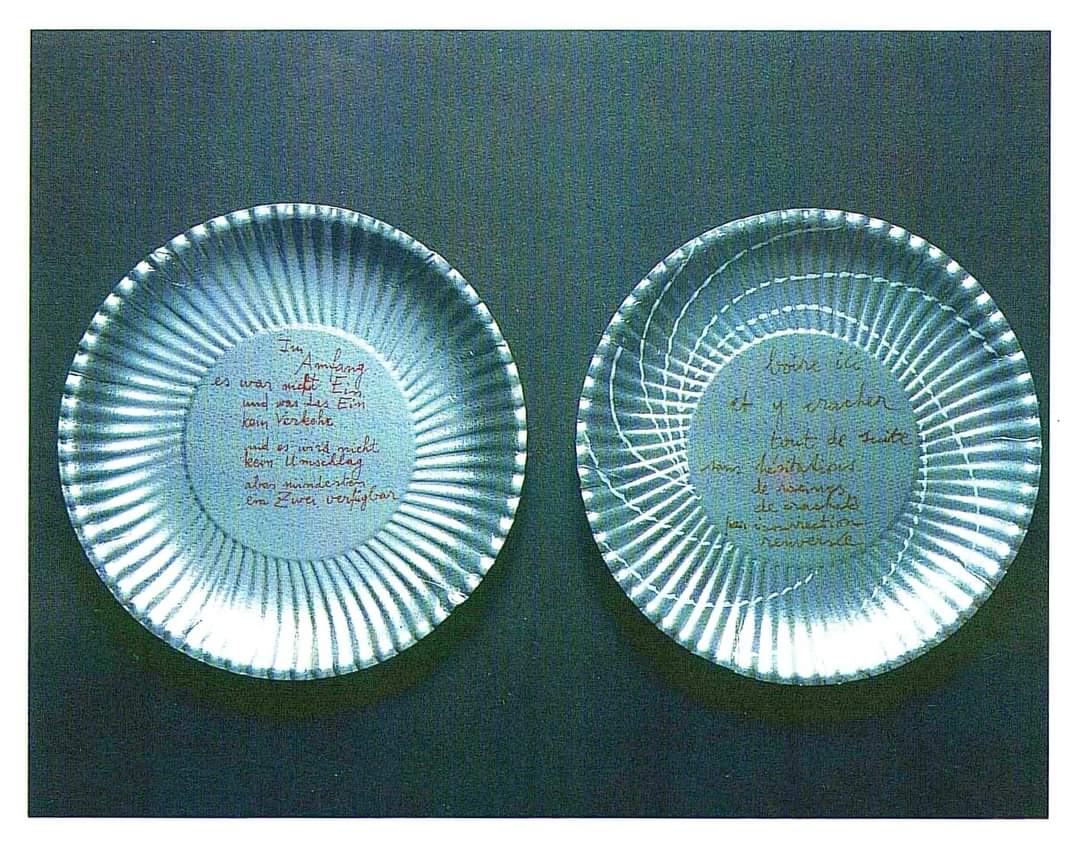
Brocche in vetro, polistirolo, sassi, piatti di plastica, cellophane, tutti i tipi di carte e cartoncino. E poi moltiplicazione, dispersione, perdita/abbandono, dimenticanza, cancellazione, distruzione: queste in fine (e per principio) le ultime estreme superfici dei segni di Villa, e la loro – per questo illimitabile – profondità.