Archivi categoria: art

20 ottobre 2020: giulia franchi e giuseppe garrera sui libri fotografici per ragazzi

interventi da vedere o rivedere:

https://www.instagram.com/tv/CGkt_oyC7w8/

LOOK BOOK da Leporello

Incontro con Giuseppe Garrera e Giulia Franchi, del Laboratorio d’arte di Palazzo delle Esposizioni, intorno al tema dei libri fotografici per ragazzi

In occasione di LOOK BOOK, Leporello ospiterà un incontro dedicato ad una selezione di libri fotografici per bambini pubblicati dai più innovativi e sperimentali editori nazionali e internazionali.

Giulia Franchi e Giuseppe Garrera porteranno ognuno 5 libri fotografici per ragazzi, spunti per raccontare la mostra in corso a Cisterna di Latina.

imago sanguineti

una mostra virtuale del 2020 tutt’ora visitabile, che è opportuno vedere o rivedere, qui:

http://imagosanguineti.altervista.org/index.html

@ entr’acte,
a cura giuliano galletta e erminio risso
_

fluxhibition #4 (2010) @ fort worth, texas (thx to cecil touchon)

FLUXHIBITION #4 – 2010

Fluxus Amusements, Diversions, Games, Tricks and Puzzles – Works from USA, Canada, UK, Ireland, Belgium, Norway, South Korea, Japan, China, Philippines, Uruguay, Colombia, Brazil, Italy, France, Greece, Australia, Portugal, Austria, Germany, Denmark, Ukraine, Hungary, Serbia.

photos of the Exhibition in Fort Worth, Texas:

fluxmuseum.org/fluxhibition4/

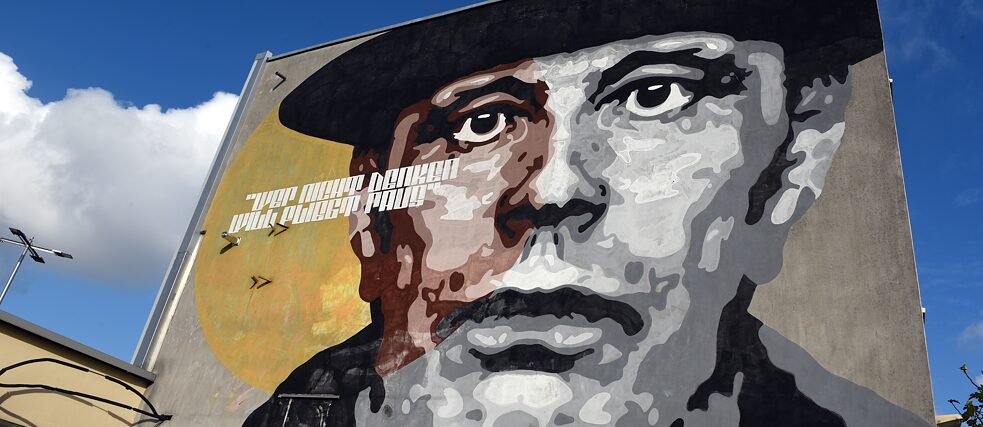
i cento anni di joseph beuys

Nicola Brucoli, qui:
https://www.goethe.de/ins/it/it/kul/art/22205388.html

Il centenario di Joseph Beuys rappresenta un momento di ricordo e attualizzazione del suo pensiero. Diverse iniziative travalicano i confini tedeschi per unire in una grande commemorazione stati europei e internazionali. Non molto spesso, infatti, le teorie e le opere di un nostro predecessore si sposano così bene con l’attualità, disegnando un percorso lineare tra passato e presente >>>

_

alice edy: concrete writing, elenchi, asemic writing, testi sperimentali, scritture di ricerca

scrittura installativa, concrete writing, elenchi, asemic writing, testi sperimentali, scritture di ricerca, experimental texts, lists, malware poetry, scrittura asemica, materiali verbovisivi, verbo-visual works

Alice Edy, ^~[(:_VIRUS.2.0)}// malware_poetry_2017 :

https://www.instagram.com/p/BRQtZCfhGNt/

Continua a leggere

letmein / alice edy. 2017

https://www.instagram.com/p/BZvRmm8Afap/

“letmein” [Password Project]: a collection from the top 1000 most common online passwords (from FB, to LinkdIn, to Gmail). These are the words that keep us safe; the language we use to let people in, or keep them out. Painted on the side of the Nelson Mandela Bridge into the Johannesburg CBD, Sept 2017.

§

from https://www.playbraamfontein.co.za/playground/alice-edy/ :

The Password Project was painted below the Nelson Mandela Bridge, on the wall opposite Play’s 62 Juta street in 2017, and  is a collection taken from the top 1000 most common online passwords (from Facebook, to LinkdIn, to Gmail –   ‘letmein’ is the 11th most common online password).

Alice says, “‘Let-me-in’ are the words that keep us safe; the language that we use to protect ourselves, and to keep other people at a distance. The bridge, as a primary artery into central Johannesburg is a site of continual human flow. The project raises questions of access control, asking people to consider how historically, and still today, language has been used as a tool in the regulation of human movement. There is also something semi-mystic about the words that hold this kind of power; a contemporary incarnation of the “Open Sesame” myth.

_

aswrig = asemic writing gallery 

ASWRIG = asemic writing gallery

 (est. 2017)

The best asemic writing from FB & the web. Daily updates.

FOLLOW it @ https://www.facebook.com/aswrig

glitch and outstitution

Differx has not disappeared. On the contrary, it wants to go on trying to study and use the margins and the ever-expanding core of the glitch(ed) art, literature, language, sound; and make the pathologies of the Western logos grow. This is the reason why it launches the trans-cultural word “OUTSTITUTION”: to focus on what this will (maybe) mean.

Let’s wiki: the word “institution” comes from Middle English “institucioun”, from Old French “institution”, from Latin “institūtiō”, from “instituō” (“to set up”), from “in-” (“in, on”) + “statuō” (“to set up, establish”). So my intent —and the aim of differx as a site— is clear:

OUT OF THE INSTITUTION.

Any kind of cultural, literary, artistic initiative is constantly under the control of the authorities through bureaucracy. Any meeting, independent structure, event, must necessarily interact with the corruption and the surrounding wall of the “city”. Perhaps the word corruption is not right. In cities like Rome the dark side of the Middle Ages has never been affected by anything. It never ended. The families who actually own the territory also rule the game. It seems a bad & kitsch distopian conspiracy remark but the sad truth is that —at least in Rome— the nobles and the high clergy are still the backbone of power today, with la haute et la grossière bourgeoisie.

So a policy of temporary autonomous zones is still the only way to play outside the chessboard. (Which hosts only kings and queens).

Ideas for and in and outside Rome are welcome.

from ‘kontextsound’, antwerp (belgium), apr/may, 1977

a few optophonetics / verbosonics excerpts from an incredibly rich fascicle (with works by —among others— van Doesburg, Houédard, Chopin, Rühm, Mon, Lora-Totino, Ladik, and a very long interview to Bob Cobbing).