Archivi categoria: install
51″ di 440 hz + rumori della strada / differx. 2021
soundbox (teatroinscatola): i tre momenti delle installazioni sonore, 29 dic. 2020
“prosa in prosa”: il trailer originale di emanuele kraushaar
rifiutate le imitazioni !
prosa in prosa: un video esplicativo
questo video spiegherà tutto:
facebook.com/emanuele.kraushaar/videos/3588974284486884
viene alla luce la terribile verità:

https://ticedizioni.com/collections/vetrina/products/prosa-in-prosa
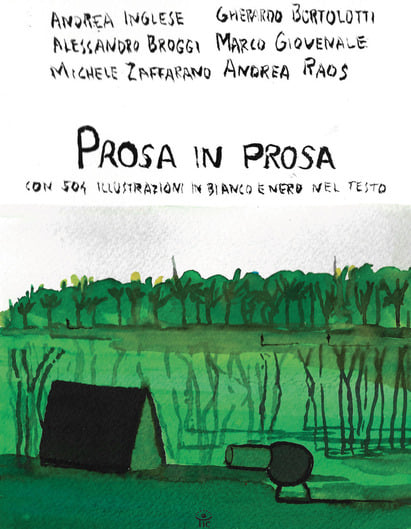
Forse l’evento più rilevante degli ultimi 20 anni della poesia italiana, di Prosa in prosa, come accade con i classici, si è parlato e scritto molto di più di quanto il libro non sia stato in effetti letto. A partire da una definizione di Jean-Marie Gleize, Prosa in prosa tentava, nel 2009-10, anno della sua prima pubblicazione, di portare una ventata spiazzante sulla scena asfittica della letteratura italiana, attraverso il travalicamento del concetto stesso di genere letterario.
Da non confondersi assolutamente con poemetti in prosa, i testi qui compresi, installando la letteralità e l’insignificanza nel luogo in cui ci si attende massima significatività e figuralità, squadernavano le categorie con cui il pubblico legge la testualità lirica. Ma se questa rivoluzione rischia oggi di spegnersi nella generale dimenticanza, questa nuova edizione, arricchita di contenuti critici, torna a imporre il tentativo, sempre più necessario, di superare l’ultimo confine, quello tra letterario e letterale.
_
dovendo pensare a un esempio di installazione testuale estrema: marcel broodthaers
<<Uno dei suoi primi lavori, Pense-bête del 1963, consisteva nell’esposizione di 50 copie di un suo libro di poesie in un blocco di gesso, dichiarando il risultato un’opera scultorea. Un sovvertimento delle forme artistiche, il quale obiettivo era quello di tramutare il libro da oggetto di lettura a oggetto visivo e contemplativo, mentre il lettore prendeva le parti di “spettatore” dell’opera d’arte>>
https://iperarte.net/artistiparola/marcel-broodthaers/
“humanizer” print, from brian dettmer


This is a new project available for humans in 2020 – an edition of 220 hand cut and perforated prints
Each print contains 900 1/4” “human” tabs to replace the “men” in your old books
All humans are connected and human contact is essential

The Humanizer print is an edition of 220 hand-cut and perforated prints that address the need to update the gender bias found in many of our printed books. The word “human” is printed and perforated in a grid to create 900 ¼” tabs. These tabs can be pulled off and glued into an old book to replace references to “man” or “men” with “human”. The Humanizer print works as a conceptual suggestion or concrete poem, but also as a functional object that could actually be used as suggested. The edition of 220 prints allows for a more inclusive perspective in our historic documents while also addressing concerns about the art market and our current economy. The accessibility of these prints flattens the hierarchy of art collecting, allowing more people the opportunity to acquire art and satisfy our human need to be conceptually and physically connected.
Brian Dettmer
Instagram- @briandettmerstudio
globo-macchina del tempo vendesi/ differx. 2020

installance # i.0150
poesiacea .it & .fr / differx. 2020
poesiAcea.it
poesiAcea.fr [merci google translate]
etymologies / united visual artists. 2018
These canvases of geometric shape are illuminated by transitioning text. Algorithmically driven, the text on indistinguishable origin recalculates, reduces and expands, motivated by but not a direct reflection of human instruction. We witness the presence of a co-contributor who while deconstructing the source text, allegorically deconstructs the concept of independent authorship and more importantly, independent readership. This process of deconstruction questions the role of authenticity and the nature of appropriation in the Information Age. Employing the post-structuralist rationale that literary sources lie impregnated with reference, inherently a product of their own authorial context, the text is reduced to pure patterns which in turn, incite the viewer to rebuild order. The words of Roland Barthes resound “the birth of the reader must be at the cost of the death of the Author” as we engage in a process of inference, seeking out logic and poetry, while simultaneously submitting to the complex, mechanical mind. The unique shape of each canvas serves to highlight how our experience is not only shaped by the content, but by the environment in which it is viewed.
throne of wind / john m. bennett. 2020