To the extent that The Absurd is a characteristic, or even at times a category of the historical avant garde, it can be asserted that asemic writing functions as a continuation of the theory and practice of the avant gardes (plural, at least since the end of WWII) in the form of a self-actualizing multitude of willful absurdities.
If the absurd is the incongruous, as Albert Camus asserted in The Myth of Sisyphus, then the simultaneous presence of the written and the unreadable is a classic example of absurdity, in its most uncontestable, experiential form.
Whereas absurdity under normal conditions requires a clash of juxtaposed items or ideas, asemic writing only requires itself, as a self-contained absurdity.
A self-contained absurdity is a Magickal Absurdity. It offers itself as a reality, of a type that should not exist. It troubles the stability of the psyche, as if for a fleeting moment there is no distinction between Sisyphus and Icarus, as if both are merely variations on the theme of Tantalus.
Desire, as often as not frustrated, thwarted, derailed, detoured, imbricate and futilitarian, anachronistic, impoxximate, inverted — invertebrate — involuntary, and/or joylessly reinsinuated,
stands,
sits,
lies
at the unsettled center of all considerations concerning the function of absurdity in everyday life.
In the case of asemic writing, we desire for that which is certainly not asemic to nonetheless function in our everyday lives as if it clearly is asemic and nothing else.
Absurdity is a very particular and peculiar variety of desire.
We want the world to be not only other than what it is — we want it to be precisely that which it can never be.
That variety of desire is precisely the allure of asemic writing. It is the distilled quintessence of its magickal absurdity.
That is not only why, but how, the practice of asemic writing reinvents itself, over and over, across centuries and cultures, one generation after another into the present.
Pour le prochain numéro d’un rectanglequelconque, vous pouvez nous envoyer vos textes en français, images, (3 pages A4 maximum svp), happenings, performances de l’écran, mots doux, poème visuel hard, bref, tout ce qui rentre dans trois pages A4 maximum.
Date butoir (et non deadline) : dimanche 21 août à 23h57.
For the nextissue of un rectangle quelconque you can send us, if you so wish, your texts in English, pictures, (3 A4 pages maximum please), happenings, screen performances, sweet words, harsh vispo poems, well, all that fits in three A4 pages maximum.
Deadline (not date butoir) : Sunday 21st August at 11:57 p.m.
Adresse | address : revueunrectanglequelconque at gmail.com
āāā azioni off kulchur 1969 TOOL editoria clan destina
āāā. azioni off kulchur è una rivista milanese co-fondata e co-diretta da Ugo Carrega, pubblicata a Milano. L’altro membro fondatore e redattore dagli Stati Uniti è stato Mario Diacono. Liliana Landi ne ha curato l’impaginazione. La rivista Includeva ritagli di testi, opere e foto di interventi di artisti che sperimentavano poesia visuale in ambito italiano e internazionale. Stampata in ciclostile, in fogli sciolti non rilegati. Consta di tre numeri, pubblicati tra il febbraio e il giugno 1969.
Redazione: Ugo Carrega e Mario Diacono. Testi di Ugo Carrega., Mario Diacono, Jean-Claude Moineau. Opere e interventi di Ugo Carrega, Mario Diacono, Rolando Mignani, Emilio Villa, Edgardo Vigo, Jean-Claude Moineau, Joel Rabinovitz, J.F. Dillon, T. Shohachiro, Vincenzo Accame, Hidetoshi Nagasawa, Hamilton Finlay e M. Allan, Davanzo and Gunzberg, A. Dias, H. Clavin, Giose Rimanelli et alii.
“Langue&Parole”, un progetto a cura di REPLICA e PIA.
In occasione di CAPRIOLA | AN ART WEEK IN LECCE, REPLICA presenta Langue&Parole, una selezione di libri d’artista e di riviste storiche provenienti dal proprio archivio. Quaranta volumi, oltre a presentarsi come materiale di studio per gli studenti della scuola PIA, daranno forma ad una mostra per gli spazi della Biblioteca Braille dell’Istituto Anna Antonacci di Lecce, che sarà dedicata al linguaggio, alla scrittura creativa e alla poesia verbo visiva. Il progetto espositivo include un invito rivolto all’artista e performer Caterina Dufi che si occuperà di dare voce ad alcuni estratti tratti dai libri sabato 2 luglio alle ore 19.30.
Nell’ambito di CAPRIOLA | AN ART WEEK IN LECCE Dal 26 giugno al 3 luglio 2022 Location: Biblioteca Braille – Istituto ‘Anna Antonacci’, Lecce (Via de Summa 1) Lettura: sabato 2 luglio, ore 19.30
Il nome del progetto vuole evocare la dicotomia linguistica teorizzata da Ferdinand de Sassure (1916) tra ‘langue’ e ‘parole’, una distinzione che ha segnato non solo la storia della linguistica ma anche quella dell’arte visiva. Il linguaggio è un sistema individuale e sociale in continua evoluzione che consta di due parti: la langue che si costituisce grazie a un sistema di segni convenzionali e astratti e la parole, atto individuale e concreto con cui ogni uomo e donna esprime il proprio pensiero.
Con l’arrivo delle Neoavanguardie poetiche, gli artisti hanno voluto sottolineare come nella nuova cultura di massa chiamata anche “cultura del neo-ideogramma” in cui è l’immagine a prevalere come strumento linguistico. Da qui la provocazione dei poeti delle Neoavanguardie, dove la parola diventa autoreferenziale: una parola-oggetto, capace di creare una contaminazione tra segni linguistici e segni visivi, nel tentativo di strutturare un codice linguistico alternativo in opposizione ai linguaggi mass-mediatici. L’interesse al linguaggio e ai suoi innumerevoli aspetti è tuttora un tema caro agli artisti contemporanei, soprattutto in quelli in cui la pratica del libro d’artista diventa il fil rouge della loro poetica. Nella selezione di libri e riviste proposta da REPLICA, segni visivi e verbali insieme a narrazioni poetiche si mostrano in un reciproco equilibrio senza subordinarsi a vicenda, raccontando in modo sintetico più di cinquant’anni di ricerche artistiche dedicate al linguaggio.
Tra gli artisti presenti in mostra: Adriano Spatola, Andrea Astolfi, Bruno Munari, Claudio Costa, Claudio Salvi, Costanza Candeloro, Corrado Costa, David Horvitz, Diego Marcon, Elena Mazzi, Emilio Isgrò, Federico Antonini, Francesco Pedraglio, Giorgia Garzilli, Giorgio Cellini, Jesper List Thomsen, Luisella Carretta, Mario Diacono, Maria Luisa Spaziani, Matteo Fato, Paul Becker, Peter Fischli & David Weiss, The Yes Men, Thomas Berra.
Giuseppe Garrera parla delle copertine di dischi di Bruno Munari e Luigi Ghirri. La mostra IMAGES FOR SOUNDS: Artist Covers for Music Records è a cura di Vittoria Bonifati.
Regia e Montaggio di Michele Ferrari. VILLA LONTANA, Roma
Giuseppe Garrera talks about the record covers designed by Bruno Munari and Luigi Ghirri. The exhibition IMAGES FOR SOUNDS: Artist Covers for Music Records is curated by Vittoria Bonifati.
Camera operator and editing Michele Ferrari. VILLA LONTANA, Rome
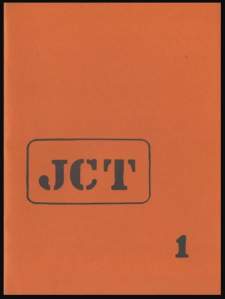
MARIO DIACONO a METRICA n’aboolira JCT, San Francisco, 1969
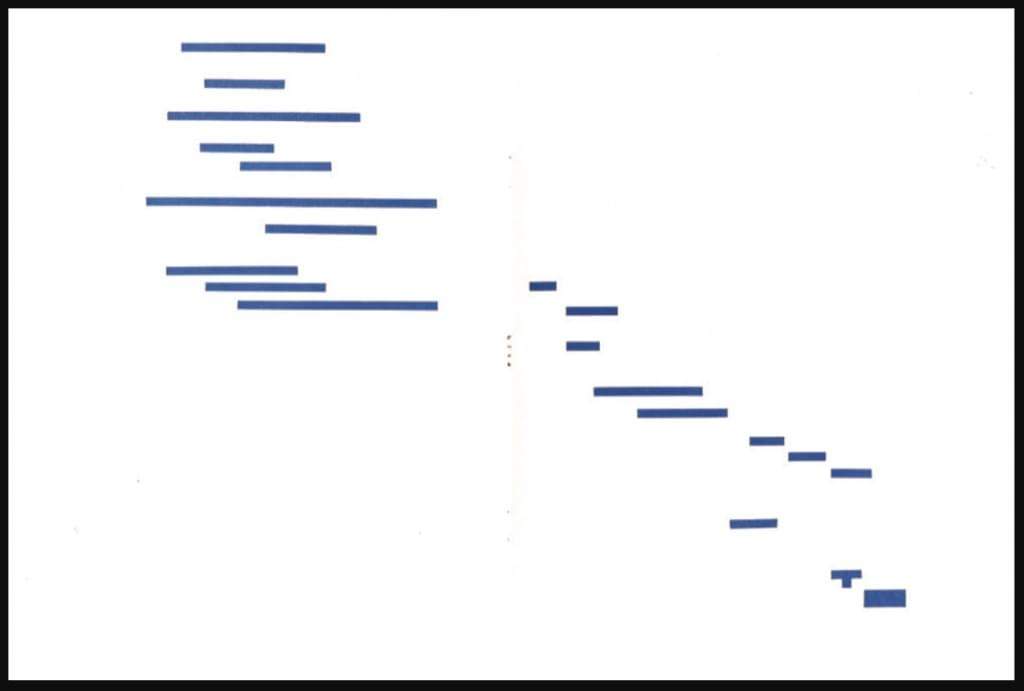
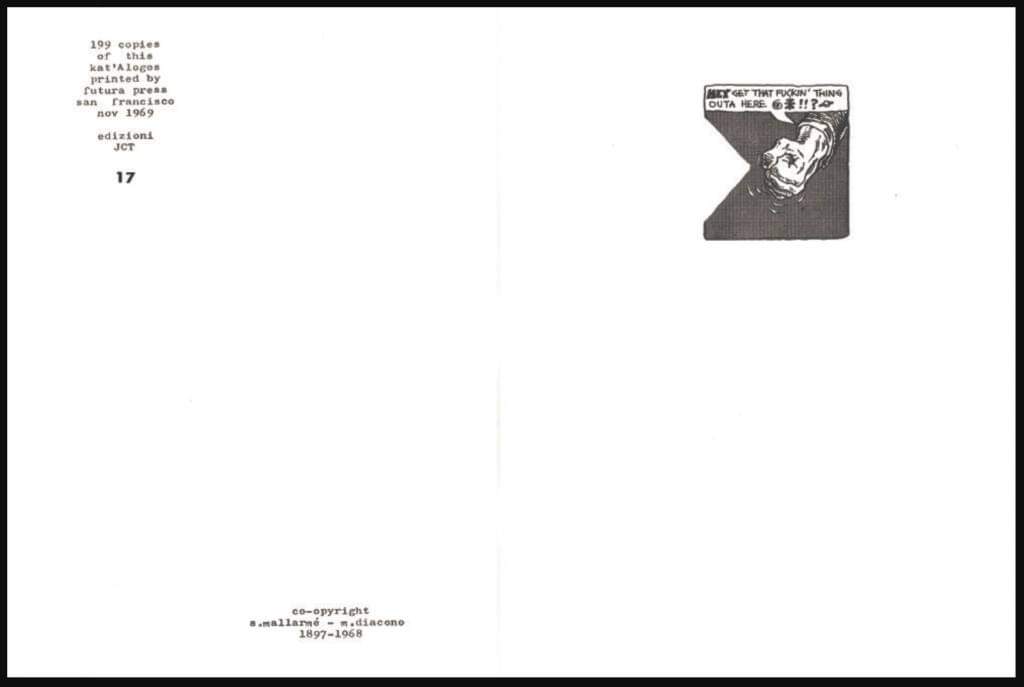
Libro d’artista costituito da tre pagine introduttive con un fumetto detournato a cui segue il frontespizio stampato in nero e arancio. Le altre pagine sono percorse da strisce variamente disposte orizzontalmente, di diversa larghezza e lunghezza e di colore arancio e bleu: chiara ripresa in termini esclusivamente visuali dell’opera di Stéphane Mallarmé «Un coup de dès jamais n’abolira le hazard» nell’edizione Gallimard pubblicata postuma (1914), in cui le parole sono disposte variamente sulla pagina bianca secondo le disposizioni del poeta.
La stessa operazione artistica viene compiuta nello stesso anno da Marcel Broodthaers con il suo: «Un Coup de Dés Jamais N’Abolira Le Hasard. Image»: le parole del testo di Mallarmé sono sostituite da strisce nere corrispondenti esattamente al layout tipografico usato per articolare il testo originale: i versi vengono resi illeggibili e le pagine trasformate in immagini. E’ da notare che l’anno di pubblicazione del libro di Diacono è il 1969 come dichiarato al colophon e non il 1968 come dichiarato in varie bibliografie. “1968” è semplicemente l’anno di redazione, indicato al frontespizio e nel copyright: “S. Mallarmé – M. Diacono 1897-1968”.
“Quando costruivo JCT 1 [A metrica n’aboolira], non avevo idea di cosa Broodthaers stesse facendo. Certamente qualcosa “era nell’aria”. La devoluzione della scrittura poetica in direzione astratta iniziata dalla poesia concreta doveva in qualche modo arrivare a una forma di cancellazione come affermazione. Mallarmé era l’archetipo che doveva essere confrontato” (Mario Diacono, testo tratto da una e-mail inviata il 20.04.2019 da Mario Diacono a Paolo Tonini).
COLLABORATIONS Mumok Vienna July 2–November 6, 2022
Departing from the focuses of the Mumok collections on the avant-garde of the 1960s and 1970s as well as conceptual and socio-analytic approaches in contemporary art, the exhibition Collaborations examines diverse strategies of collective authorship. The exhibition builds a bridge spanning from the smallest to the largest unit of togetherness: from the internal ties of the collective to a particular constellation of the connective, from the artist duo to society—and last but not least, from the love affair to the interconnectedness of life.
The exhibition investigates how artistic models of a “we” can be cultivated for life together as a society: What does collaboration mean in the twenty-first century when fundamental social structures continue to dissolve? How have artists responded to such social and political developments over the decades and what is their position today? How thin is the line between the critique and affirmation of neoliberal structures when building relationships is at risk of becoming an efficiency and profit-driven measure in the artistic realm, too? How can collectivity in thoroughly heterogeneous contexts serve as a social and artistic model of thought and action, when not by accepting the simultaneity of disparate or even contrary elements?
In times of networked connectivity, a look back into art history might advance the current discussion about collaborative action—beyond conventional, social, and national borders. As a movement that not only fundamentally revolutionized artistic production, distribution, and reception paradigms but also originated numerous strategies that represent, as it were, predigital antecedents to algorithms, interconnected networks, and associated models of communitization, the Fluxus movement founded in the 1960s forms the nucleus of the presentation. In addition to the expansion of the typologies of works, image and object traditions, and artistic and participative methods, which were formative for the neo-avant-garde of the mid-twentieth century, the emphasis is placed specifically on the will and ability of artists to go beyond their personal scope in experimental collaborations with colleagues, to allow for change along with the shift in perspective on their own practice.
Collaborations highlights key aspects of the Mumok collection by exhibiting works that operate primarily on a meta-reflexive level. What these works, which often emerged in collective processes, have in common is that they all reflect on ways of living and working together. While the curatorial approach examines artist collectives and their underlying mechanisms and logics, it also frames acting itself as a form of collectivity—a form of acting that equally acknowledges the artistic expressions of individuals as well as those of groups or other models conceived as affiliations and alliances of the participants. The utopian potential of collaborations to transcend Western patriarchal power relations and art market logics of originality and solitary authorship and thereby provoke social change seems to be unwavering.
Artists: Marina Abramović & Ulay, Ant Farm, Art & Language, Martin Beck, Bernadette Corporation, Anna & Bernhard Blume, George Brecht, Günter Brus, John Cage, Merce Cunningham, Chto Delat, Leidy Churchman, Clegg & Guttmann, Phil Collins, Bruce Conner, DIE DAMEN, Jean Dupuy, VALIE EXPORT, Peter Faecke and Wolf Vostell, Robert Filliou, Rimma Gerlovina & Valeriy Gerlovin, Gilbert & George, Manfred Grübl, Andreas Gursky, Richard Hamilton and Dieter Roth, Haus-Rucker-Co., Christine & Irene Hohenbüchler, IRWIN, Ray Johnson and Berty Skuber, On Kawara, Friedrich Kiesler, Alison Knowles, Brigitte Kowanz and Franz Graf, Louise Lawler, Lucy R. Lippard, Sharon Lockhart, George Maciunas, Larry Miller, Ree Morton, Otto Muehl, museum in progress, Moriz Nähr, Natalia L.L., Otto Neurath, Yoko Ono, Nam June Paik, Stephen Prina, Jörg Schlick, Hubert Schmalix, Secession, Seth Siegelaub, Christian Skrein, Daniel Spoerri, Petr Štembera and Tom Marioni, Thomas Struth, Timm Ulrichs, VBKÖ, Kerstin von Gabain and Nino Sakandelidze, Franz Erhard Walther, Robert Watts, Franz West, Wiener Gruppe, Oswald Wiener, Heimo Zobernig and others; with the video series lumbung calling from documenta fifteen, curated by ruangrupa.
Curated by Heike Eipeldauer and Franz Thalmair. Exhibition design by Anetta Mona Chişa & Lucia Tkáčová
Image: Ulay, Marina Abramovć, Breathing In / Breathing Out, 1977
For practitioners and theorists of asemic writing, the perceptual deviation known as pareidolia is an acquired taste and a developed skill. We train ourselves to see alphabetical shapes where there are none, and then we celebrate our inability to read them. This phenomenon could occupy an entire chapter in the Magickal Absurdities Training Manual: The Ecstasy of Asemic Reading.
Personal Perception Management (PPM) is but one of a great many Existential Self-Help (ESH) methods reinsinuated transmutably in The Training Manual. It is known colloquially among The Asemic AntiMasters as PPMESH — Personal Perception Mesh. The tradition, or parade of asemic saints, involved in transmigrating this alchemy of perception from prehistory into the present, includes William Blake, Arthur Rimbaud, Emily Dickinson, Aldous Huxley, Diane di Prima and Jim Morrison. Cleanse the doors of perception to Illuminate the arrangement of the senses.
Or the arrangement of the world(s) by the senses.
Let’s say I make a sequence of tangled squiggles… I sound them aloud, slowly singing their shapes… Through the processes of transcription, transliteration, and apophenia, I arrive at a deliberate mishearing of a segment from a song sung by Jim Morrison:
meatza pocca hero, Esau funk, awe yeh
The world is a poem. Some of us know that. Know it whether we want to or not. The world snuck up on us when we were young, and planted the cosmic poem-seed at the base of our tender brains.
Asemic writing works as a kind of pagan missionary for The Poem.
Asemic writing is a mutagen.
Pareidolia is one of its tools, one of its schools, a side effect, mutual aid, elective affinities, the ace of hearts up its sleeve, one foot on the other side of the grave still kicking at the pricks, reinsinuated and impoxximate.
We see what we want to see. No. That’s not right. Read what Thou Wilt. We see what we need to see. Some realities are more real than others. Asemic writing is useful, as a kind of anti-linguistic self-medication for the perpetually seeking psyche. Pareidolia is a method of ongoing research. It allows us to discover, investigate and explore provisional realities. The worlds of pareidolia are experientially real, and as such are causal agents — in our thinking, and in our actions as they emerge from that thinking.
As an entanglement with the processes of pareidolia, asemic writing functions for the perennially seeking psyche as a way of practicing reality.
The most important and interesting characteristic of asemic writing is its absolute resistance to interpretation.
The value of asemic writing lies in its semantic emptiness, and relies on the genuine frustration experienced during a failed attempt at interpretation, meaning-building, the collaborative construction of meanings.
Success in reading asemic writing implies an inauthenticity, either of the writing and it’s author, or of the reading and its perpetrator.
Authentic asemic writing denies all access to success.
The complete and utter, total failure of an attempted reading is the only acceptable measure of success for any particular instance of asemic writing.
So, to iterate — and reiterate: 1. asemic writing lies? 2. asemic writing re-lies? 3. asemic writing imp-lies?
Please refer to your copy of The Magickal Absurdities Training Manual for answers and/or elucidations.
Asemic writing has a dirty secret, hidden, as usual, in plain sight: it is all a pack of lies, and always has been.
Asemic writing is not a dispensary for recreational truths.
Asemic writing is not a dispensary for medicinal truths.
Asemic writing does not participate in the language game of dispensing truths.
We have a choice where the existential ground of asemic writing is concerned: either we admit it’s non-existence, and celebrate it for not existing, or we lie to ourselves and each other about it’s existence, and through the persistence of our collective effort, bring it — lie it — into being, no matter how provisional, damaged, and ephemeral that being may be.
Today, in the summer of 2022, there is no denying the fact that a great many things in our world are identified by one variety or another of the term asemic writing.
That in itself is good.
The concept of asemic is generative and tolerant. Let’s frolic in its wonderland! With our first mind celebrating it’s ludic absurdity, and our second mind practicing the pleasures it offers in opportunities for critical thinking.